Introducing

Open Nexus

BY COSMIC AEI

See what you're really carrying.

For people whose job is to stay steady under pressure, and for the people who lead them. Pick the one that sounds like you.

The problem

Some jobs need you to stay steady, whatever just happened.

On dispatch

You took the worst call of your month. Eleven seconds later, you took the next one.

At the gate

Someone screamed at you over a cancellation you didn't cause. You smiled and boarded the next flight.

On the truck

You carried a stranger's worst day down three flights of stairs. Then you restocked and went back in service.

On the phones

Forty calls today. Six of them yelled. Your score depends on sounding glad they called.

After any shift

Someone asked how your day was. You said "fine." It was easier.

Leading the team

You found out your best person was struggling the day they handed in their notice.

It doesn't go away. It gets carried.

Everyday moments from this kind of work, written as illustrations. They aren't quotes from real people.
How bad it is

Silence is expensive.

57%

of first responders believe asking for counseling would hurt them at work.

85%

of flight attendants dealt with unruly passengers in the first half of 2021. For 17%, it turned physical.

82%

of 911 centers say they don't have enough staff. 74% say burnout is a problem.

36%

of full-time EMTs left their employer in a single year.

When people can't say it, it comes out another way: mistakes, sick days, resignations. And every empty seat makes the next shift heavier.

Sources: University of Phoenix first responder survey, 2019 · Association of Flight Attendants-CWA survey, 2021 · NENA and Carbyne, 2023 Pulse of 9-1-1 · American Ambulance Association and Newton 360, EMS turnover study (2021 data)

What hasn't worked

The usual answers all ask people to go first.

The yearly survey

Once a year, with your team's name on it. People write what's safe.

The help line

It's there if you ask. Many people won't, because they believe asking will cost them.

The open door

It opens into your supervisor's office, which is the hardest place to say it.

What we do differently

We don't wait for anyone to raise their hand.

One

A private place, any hour

Open Nexus. Write it or talk it out, and see what it read underneath your words.

Two

Help offered, not requested

If your words point to something serious, it points you to real people. No explaining required.

Three

One signal for leaders, behind a wall

CHR gives leaders one weekly reading per group of eight or more. No names, no words.

How it works, in three seconds.

THEIR SIDE Eight people write. Nobody at work reads a word of it. On their own. No form, no name. THE WALL NO NAMES NO WORDS THE DEPARTMENT SIDE One range, once a week. Per group. Never a person. 60 to 70 Steady, or moving, or too small a group to report at all. THEIR SIDE Eight people write. Nobody at work reads a word of it. NO NAMES. NO WORDS. NOTHING CROSSES. THE DEPARTMENT SIDE One range, once a week. Per group. Never a person. 60 to 70 Steady, or moving, or too small a group to report at all.
Illustration. The range is an example, not a reading. Nothing on this page comes from anyone's data.

Where we are today

Honest about where this stands.

Read the Ledger How it works
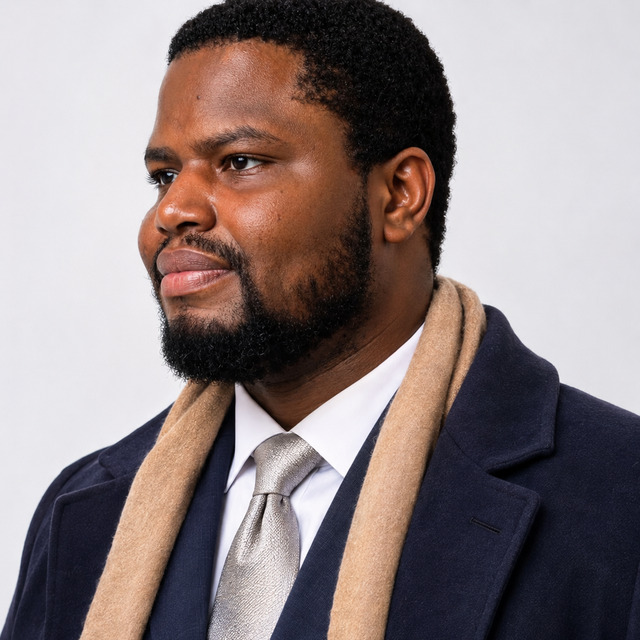
Georges Talon, founder of Rage Relief LLC

Who built it

Georges Talon

Founder and chief executive of Rage Relief LLC, the company behind the COSMIC AEI engine and Open Nexus. Ashburn, Virginia.

Across my career I kept running into the same thing. Work gets better when leadership and the people doing it can tell each other the truth, and it gets worse when they cannot. That gap is what this was built to close, and it is why the wall is the first design decision rather than a feature bolted on afterwards.

About the company

Which one are you?

Start where it fits. You can always look at the other side too.

I'm here for myself I'm responsible for a team